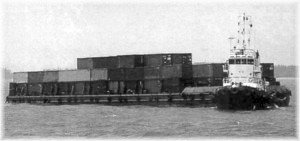
Connecticut has 3 deepwater ports – Bridgeport, New Haven and New London – and their potential is enormous. Transporting goods and people over Connecticut's blue water highway is a viable and safe alternative to I-95 gridlock.
• Reduce truck traffic on I-95 by establishing a coastal barge system to move truck containers between NY/NJ and Connecticut. Partners: CONNDOT Transportation Strategy Board, CT DECD, Bridgeport Port Authority, New Haven Port Authority, New London Port Authority.
• Reduce traffic
on I-95 with a high speed ferry system between Bridgeport, Stamford and
Wall Street. Partners: CONNDOT Transportation Strategy Board, CT DECD,
Bridgeport Port Authority.
• Ensure uninterrupted
shipping and safety of Long Island Sound by installing a 24-hour ship
monitoring device (surface radar) on Fisher's Island. Partners: US
Coast Guard.
• Increased state investment ($1.9 million) in the first coastal barge feeder system between NY/NJ and Connecticut.
• Legislation passed creating and staffing the CT Maritime Commission (the Commission).
The Commission is the primary body within the State of Connecticut to develop and recommend maritime policy to the Governor and the General Assembly. It is responsible for developing and updating a long-term strategic plan for all ports and waterways in the State of Connecticut with a focus on the three deep water ports. Within its purview, the Commission will review, recommend and develop policies as they relate to the maritime sector and Public Act No. 04-143. The maritime policy will address issues concerning the maritime sector, related industries and port infrastructure (public and private).
• Solidified relationships with key organizations by positioning cluster members on boards of directors of key organizations. Partners: Connecticut Maritime Commission, American Association of Port Authorities, Connecticut Pilots Commission, Transportation Strategy Board, Bridgeport Port Authority, New Haven Port Authority and Passenger Vessel Association.
|
The Facts |
• In Connecticut, 19 million tons of cargo, 2.6 million people and 850,000 vehicles are moved over water by private operators each year.
• Waterborne transport
keeps 950,000 trucks off Connecticut's roads annually. |
|